Your state's rules, on every single piece.
Every state tells agents how to advertise — whose name goes on the ad, how large, next to what. Most tools leave that to you, at 11pm, on your phone. We researched all fifty-one jurisdictions, wrote each one down as data, and the product reads yours every time it draws.
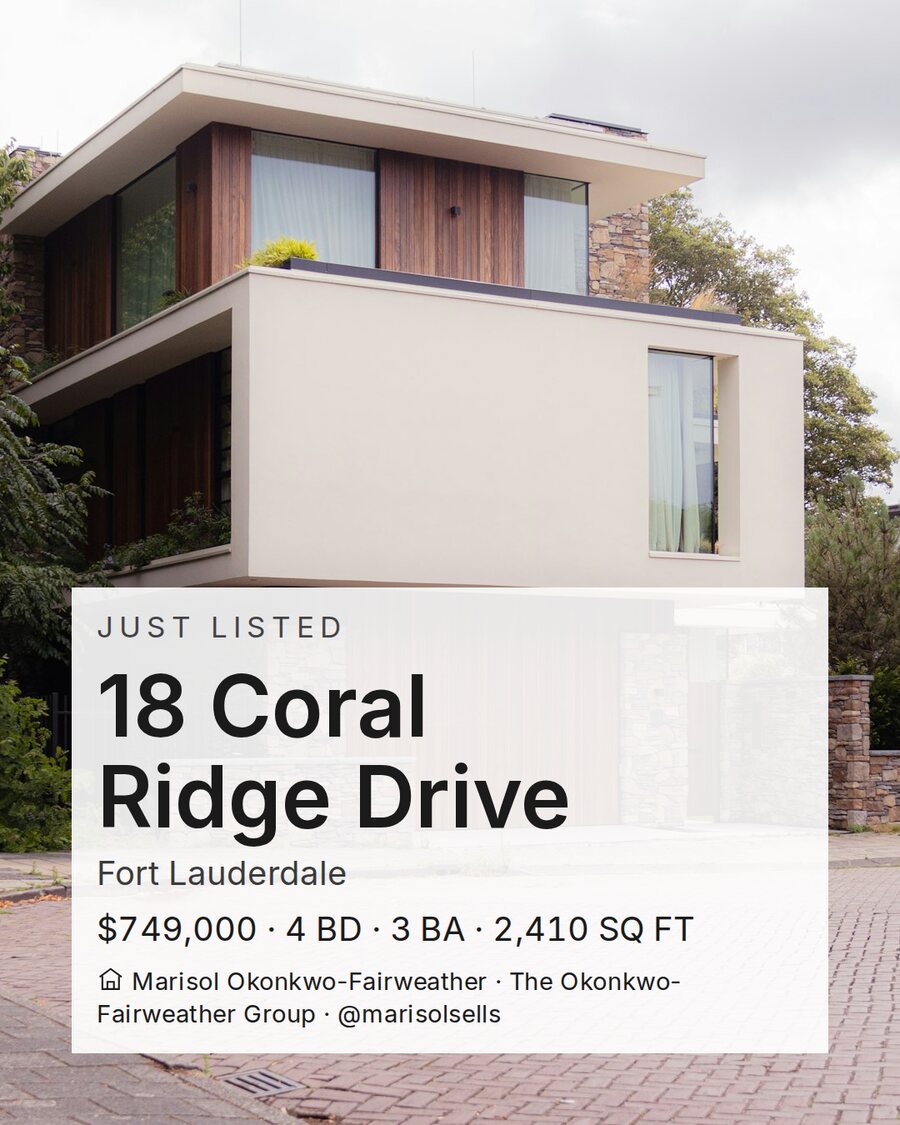
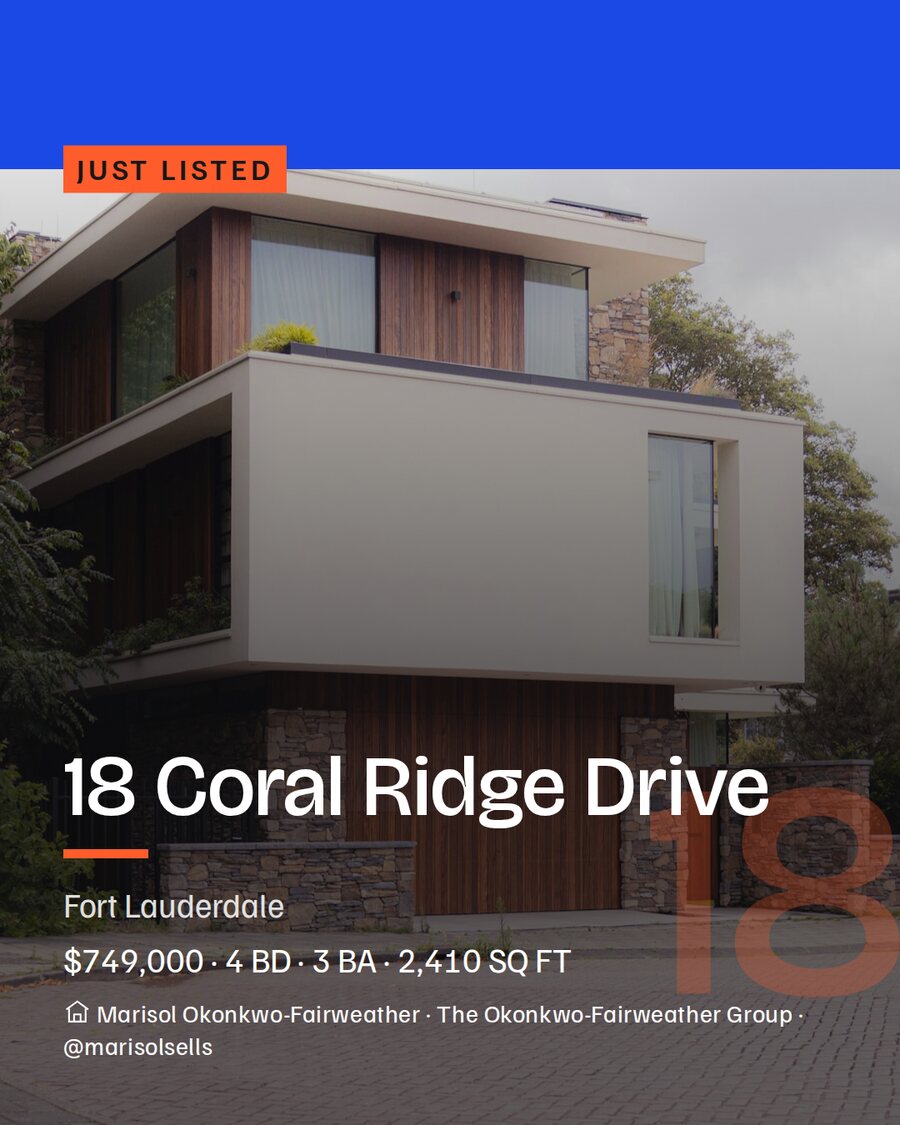
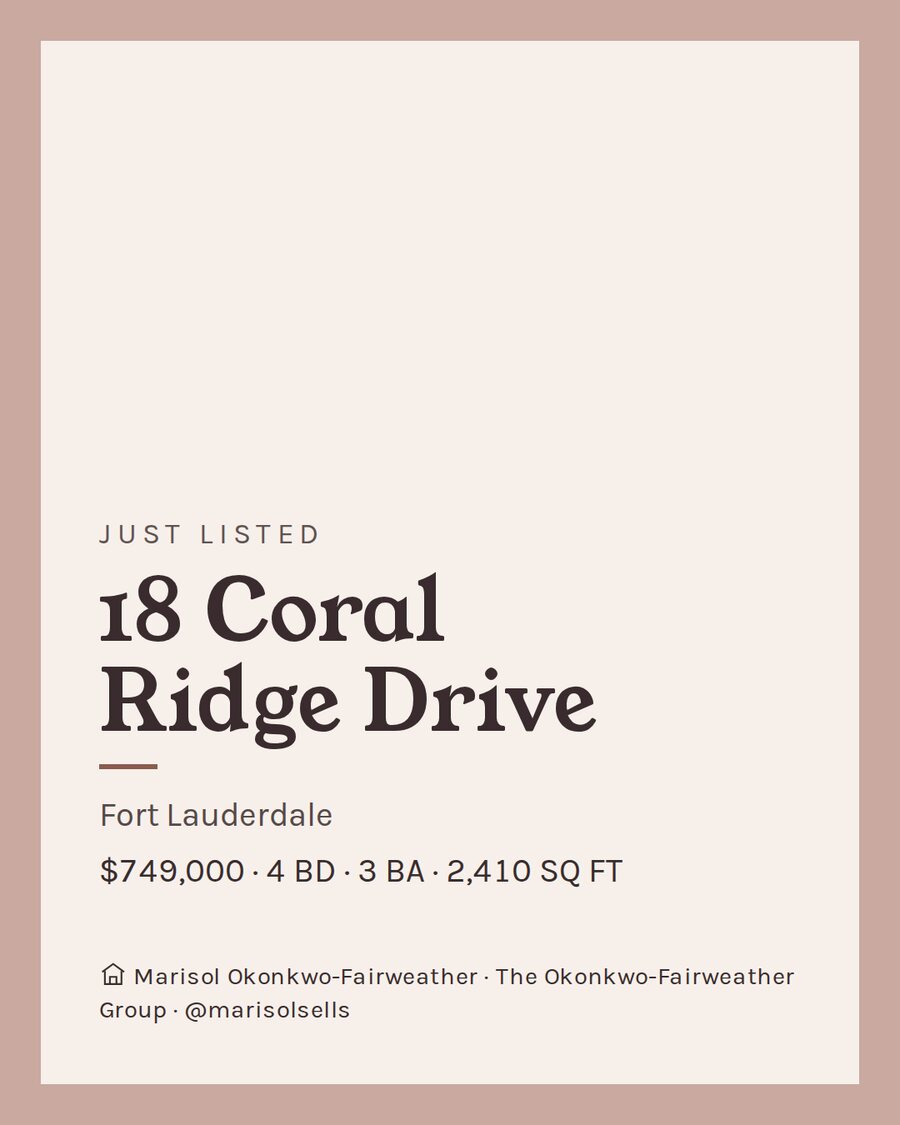
One line, placed by rule.
It renders from your kit onto every post, story, carousel slide, flyer, sign and end card. It is not a setting and it is not a layer you can move: the street's layout holds a floor for it, and the copy above shrinks before the line does.
Where a state sets a size — Ohio's brokerage at least as large as your name, Rhode Island's strictly larger, Texas's at least half your largest contact detail — the line is sized to the rule, not to a point size someone picked once. Where a state asks for more than a name — your brokerage's phone in Georgia, its address in West Virginia, your title in Hawaii — the line carries it.
- 1Your name. On every line; California, Connecticut, Hawaii, Montana, New Jersey, Ohio and Oregon require it by rule.
- 2Your brokerage. Required in all 49 states we are open in — Ohio at least as large as your name, Rhode Island strictly larger, Texas at least half the size of your largest contact detail. 16 states also want its phone number, or an address, and the line carries whichever yours asks for.
- 3Licence number. Required in California and Nevada; carried wherever your kit has one.
- 4The Equal Housing mark. Federal, and on every piece.
The same line, on every street.
A street decides where the line sits and what it sits on — paper, a plate, a colour block — never whether it is there. Three of the six, one listing.
Fair Housing, checked as you type.
Everything you write — a feature, a note, the caption we draft — is screened against a maintained list of terms that describe who a home is for rather than what it is. Anything flagged stops the piece before it is made, names the term, gives the reason in one clause, and hands the words back to you. We never rewrite them.
It is an aid, not a guarantee, and it will be wrong somewhere; the list is versioned like the state rules and changed by a person who has read the rule, never silently.
Corner lot, quiet street, perfect for a couple
We can't use “perfect for a couple” — Fair Housing rules don't allow describing who a home is for. Try describing the home instead.
Two blocks from the park, walking distance to the school
“Walking distance” can read as describing the people rather than the home. Safer to say “close to” — but it's your call.
Open where we are sure, honest about the rest.
A state opens when our layouts carry everything it asks for and a person has read the rule. Where they do not yet, you cannot sign up — and the reason is written in plain words, per state, at the door. Alabama wants your brokerage's name larger than everything else on the ad, headline included, and that is a different layout, not a setting. Alaska we could not get a clear answer on, and we would rather say so than guess.
- AR
- AZ
- CA
- CO
- CT
- DC
- DE
- FL
- GA
- HI
- IA
- ID
- IL
- IN
- KS
- KY
- LA
- MA
- MD
- ME
- MI
- MN
- MO
- MS
- MT
- NC
- ND
- NE
- NH
- NJ
- NM
- NV
- NY
- OH
- OK
- OR
- PA
- RI
- SC
- SD
- TN
- TX
- UT
- VA
- VT
- WA
- WI
- WV
- WY
Alabama and Alaska are not open. Each has a real reason, in plain words, at the door. No dates: we would rather look unfinished than be wrong.
What this is, and what it is not.
The line and the screen are drawn from the rules as we have researched them, and they are placed to those rules by code that is tested against them. They are an aid. They are not legal advice, and you remain responsible for what you publish — which is why the line cannot be switched off, and why a state we are not sure of stays closed.